Ever find yourself staring blankly at your screen, knowing you have important work to do, but unable to focus? In our hyper-connected world, deep work—the state of distraction-free concentration on a demanding task—is more precious than ever. But deep work doesn’t just happen; it requires intention and ritual. By adopting five simple yet powerful pre-work rituals, you can prime your mind, minimize distractions, and enter a state of flow on demand. Ready to level up your productivity? Let’s explore the rituals that will guide you into a deep work zone whenever you need it.
Ritual 1: The Environment Reset
Declutter Your Workspace
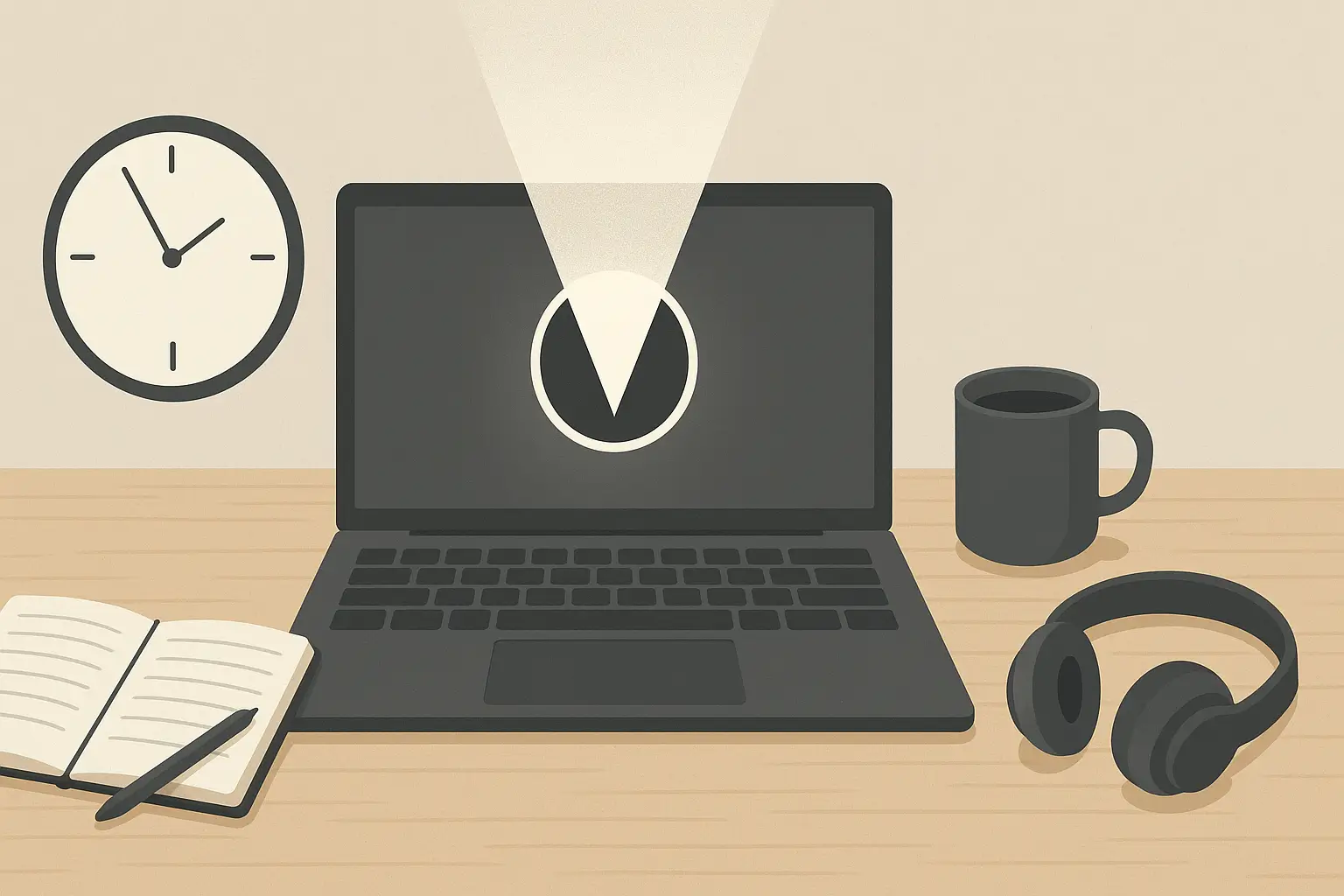
A clear desk fosters a clear mind. Spend two minutes removing all non-essential items—such as loose papers, cups, and phone chargers—and leave only the tools you need for your current task. A minimalist environment reduces visual clutter, helping your brain focus on a single objective.
Set the Lighting and Temperature
Adjust your lighting to a soft, indirect glow—no harsh fluorescents—and ensure your room is comfortably cool (around 20–22°C). Scientists have found that cooler environments boost alertness and cognitive performance, helping you stay engaged longer.
Cue with a Visual Anchor
Place a single object—like a small plant, candle, or inspirational quote—directly in your line of sight. This object becomes your “deep work beacon,” subconsciously signalling to your brain that it’s time to focus whenever you see it.
Ritual 2: The Two-Minute Mind Sweep
Capture Lingering Thoughts
Open a blank document or grab a piece of paper and spend exactly two minutes writing down every task, idea, or worry on your mind. No filtering—dump everything. By offloading mental clutter, you free up working memory for your more complex tasks.
Organize Your Notes
Quickly categorize your list into “Now,” “Later,” and “Delegate.” Assign a time or person to each item in “Later” and “Delegate” to ensure nothing falls through the cracks. This rapid triage lets you commit fully to the work ahead without subconscious nagging.
Set a Single Intention
At the bottom of your mind-sweep page, write one clear, concise goal for your deep work session—e.g., “Outline three sections of the report.” This intention anchors your focus and provides a measurable target to guide your efforts.
Ritual 3: The Pre-Work Activation
Five Minutes of Movement
Physical movement kick-starts both body and brain. Do a quick set of stretches, ten bodyweight squats, or a short walk around your room. Exercise increases blood flow and releases endorphins, sharpening your attention and elevating your mood.
Breathwork for Clarity
After moving, spend one minute practicing box breathing: inhale for 4 seconds, hold for 4 seconds, exhale for 4 seconds, and hold for 4 seconds. This simple pattern calms the nervous system, reduces stress hormones, and primes your mind for sustained concentration.
Cold Water Splash
If you can, splash your face with cool water or take a brisk cold-water hand rinse. The sudden temperature shift jolts your alertness, heightening sensory awareness for the deep work that follows.
Ritual 4: The Distraction Lockdown
Digital Do Not Disturb
Activate “Do Not Disturb” on your phone and computer. Mute all notifications and consider using focus-mode features or third-party apps (such as Forest or Freedom) to block social media and email for your entire session.
Single-Task Timing
Set a timer for a focused block—25, 45, or even 90 minutes, depending on your preference. Committing to a fixed interval creates a psychological contract: You agree to work undisturbed for that span, and your mind can settle into deep concentration.
Physical Barriers
Place your phone screen down or in another room. If you share a workspace, hang a simple “Deep Work in Progress” sign to signal to colleagues that you are focused and minimize interruptions. Every barrier you introduce makes it less tempting to slip into distraction.
Ritual 5: The Startup Cue
Play a Signature Soundtrack
Curate a 30-minute playlist of non-lyrical, ambient, or instrumental tracks you associate exclusively with deep work. As soon as the first song plays, your brain recognizes it’s “focus time,” allowing you to enter a state of flow more quickly.
Use a Ritual Phrase
Develop a short mantra—such as “Begin” or “Dive In”—and say it aloud once before starting. This verbal cue acts like an athlete’s pre-game chant, signalling to your brain that it’s time to shift into high-gear concentration.
Initiate with a Micro-Task
Start with the easiest possible action related to your main goal—opening the document, typing the title, or running a short search. This micro-task accelerates the momentum and makes the transition into deeper work virtually seamless.
Integrating Rituals Into Your Routine
- Pre-Session Checklist: Before every deep work session, run through a mental checklist of the five rituals—Environment Reset, Mind Sweep, Activation, Lockdown, and Startup Cue.
- Consistency Is Key: Perform these rituals in the same order and location each time. Consistency strengthens the neural associations that trigger deep work faster.
- Track Your Sessions: Keep a simple log of session length, date, and task accomplished. Reviewing this record helps you refine your rituals and identify optimal session lengths.
Adapting Rituals on the Go
- For Travel: If you’re on the move, consider compressing the environment reset by organizing your laptop and packing noise-cancelling headphones. Use a quick mental mind sweep and play your focus playlist in your ears.
- For Short Bursts: When you only have 15 minutes, skip the movement and cold splash, but maintain the mind sweep, lockdown, and micro-task startup to make the most of limited time.
- For Team Settings: Coordinate group deep work sprints with your team by synchronizing timers, playlists, and “do not disturb” signals—creating a collective focus zone.
Measuring Your Deep Work Success
- Session Count: Aim for at least one to two deep sessions per day, gradually increasing as your capacity builds.
- Task Progress: Track the percentage of your goal completed during each session—document pages, code written, designs drafted.
- Subjective Sharpness: Rate your perceived focus on a scale of 1 to 10 after each session. Note which rituals or session lengths yield the highest scores.
Conclusion
Deep work isn’t a random gift bestowed on the lucky few—it’s a skill you build through consistent rituals. By resetting your environment, clearing mental clutter, activating your body and mind, blocking distractions, and using powerful startup cues, you can enter a deep work zone at any time you need. Start with one ritual today, then layer in the rest as they become habitual. Before long, you’ll transform your most demanding tasks from drudgery into flow-filled achievements.